
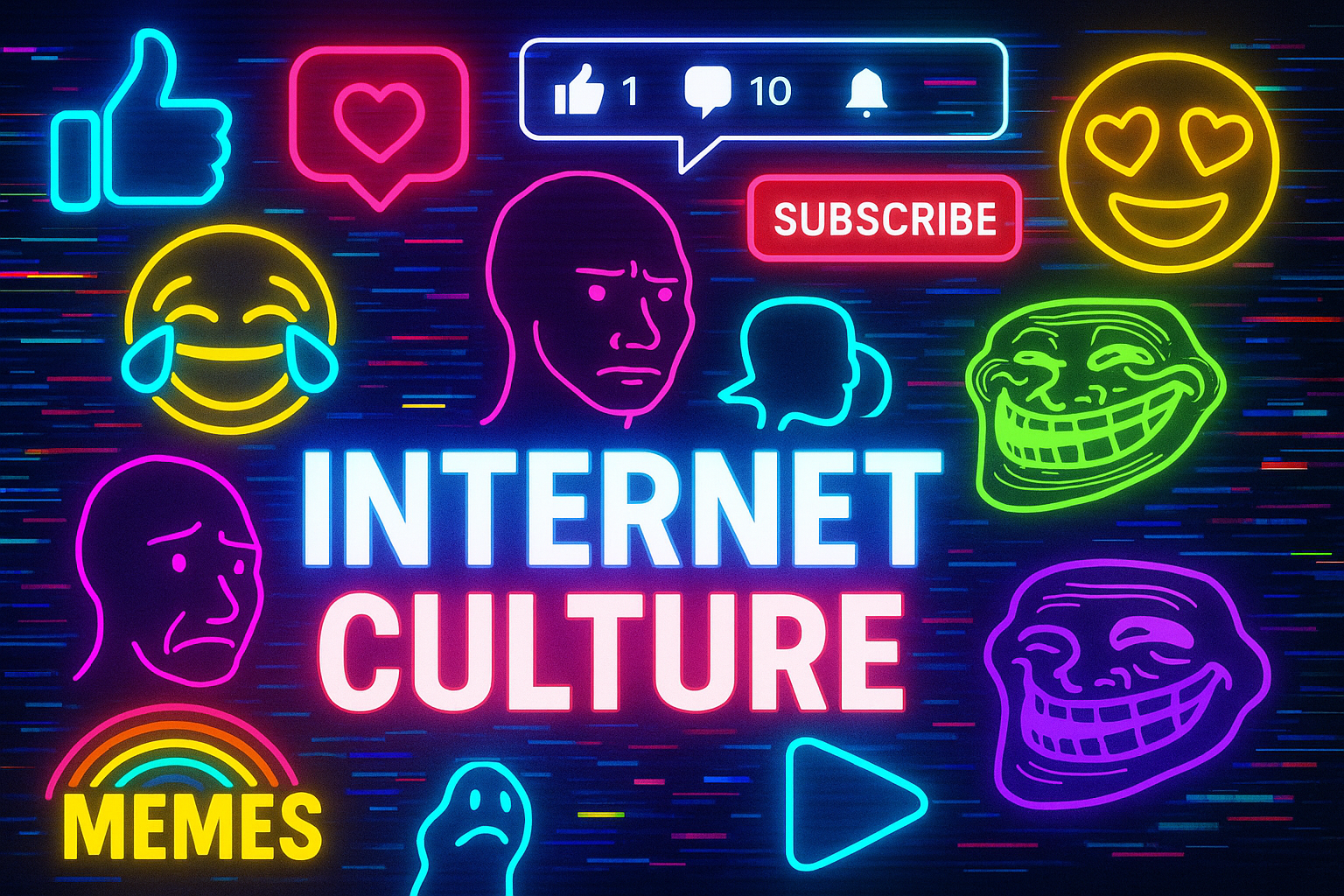
Internet Culture – Memes, Trends & Online Behavior That Shape the Digital Era
Internet Culture is one of the most dynamic, rapidly evolving parts of modern society. From memes and viral challenges to slang, fandoms, controversies, and influencer-driven trends, the online world has created its own language, identity, and lifestyle. Today, the internet is not just a technology—it’s a living culture with its own rules, heroes, humor, and communities.
1. The Rise of Memes – The Heart of Internet Culture
Memes are the universal language of the internet. They spread fast, change constantly, and reflect how society thinks or reacts to events.
Why memes matter:
- Instant communication: A single meme conveys emotions or ideas quickly.
- Community bonding: People bond over shared humor.
- Social commentary: Memes often highlight politics, trends, and cultural issues.
- Entertainment: They make online platforms fun and relatable.
From “doge” to “NPC memes” to “sigma grindset,” meme styles constantly evolve, creating new micro-cultures every month.
2. Viral Trends & Challenges
Internet culture thrives on viral moments. These include:
- Dance challenges (TikTok trends)
- Glow-ups & transformations
- Reaction videos
- Lip-syncs & remixes
- AI-generated content
A simple video can go from 10 views to millions overnight—thanks to algorithms and user engagement.
3. Online Communities & Fandoms
Communities define internet culture. They gather around shared interests like gaming, anime, sports, music, and more.
Popular types of online communities:
- Gaming clans & Discord servers
- K-pop fandoms
- Reddit subcultures
- Streamer fanbases
- Tech & coding groups
These groups develop their own slang, rules, inside jokes, and identity—creating strong digital tribes.
4. Digital Slang & Internet Language
Internet culture has created an entirely new style of communication. Popular slang includes:
- LOL, LMAO, OMG
- Cap / No Cap
- Based
- GOAT
- Ratio
- W / L
Platforms like TikTok, Reddit, and Twitter frequently create new words that quickly spread to mainstream media.
5. Influencers & Creator Culture
The rise of influencers has changed how people consume content. Creators shape trends, opinions, and even purchasing decisions.
Types of influencers in internet culture:
- Vloggers
- Gamers & streamers
- Lifestyle creators
- Comedians & meme pages
- Tech reviewers
Influencers are the new celebrities of digital society—and their fans often play a big role in amplifying trends.
6. Cancel Culture & Online Drama
Another part of internet culture is the speed at which controversies spread. One mistake can go viral within minutes.
Cancel culture and online backlash have become common, driven by:
- Misquotes or misunderstood posts
- Old resurfaced content
- Celebrity fights
- Political disagreements
Drama, for better or worse, is a key ingredient of online entertainment.
7. Internet Humor & Irony
The internet has created a unique category of humor—surreal, chaotic, self-aware, and sometimes nonsensical. Examples include:
- Absurdist memes
- Dark humor edits
- AI remix jokes
- “Shitposting” culture
This style is often confusing to offline audiences, but it’s a core part of digital identity.
8. The Algorithm – The Real Trendsetter
Behind every viral trend is an algorithm deciding what goes viral. YouTube, Instagram, TikTok, and Twitter all use AI-based recommendations that shape internet culture by:
- Boosting trending keywords
- Promoting creators with high engagement
- Amplifying controversial or emotional content
- Creating echo chambers
Algorithms are the unseen directors of online culture.
9. The Dark Side of Internet Culture
While fun and creative, internet culture has challenges too:
- Trolling & harassment
- Misinformation
- Addiction & screen-time issues
- Online bullying
Staying aware and maintaining digital balance is important in today’s hyper-connected world.
Conclusion
Internet culture is a constantly shifting universe of memes, trends, influencers, digital language, and online communities. It has changed how people communicate, behave, and even think. As technology continues to evolve, so will the culture around it—making the internet one of the most exciting and unpredictable places in the world.